

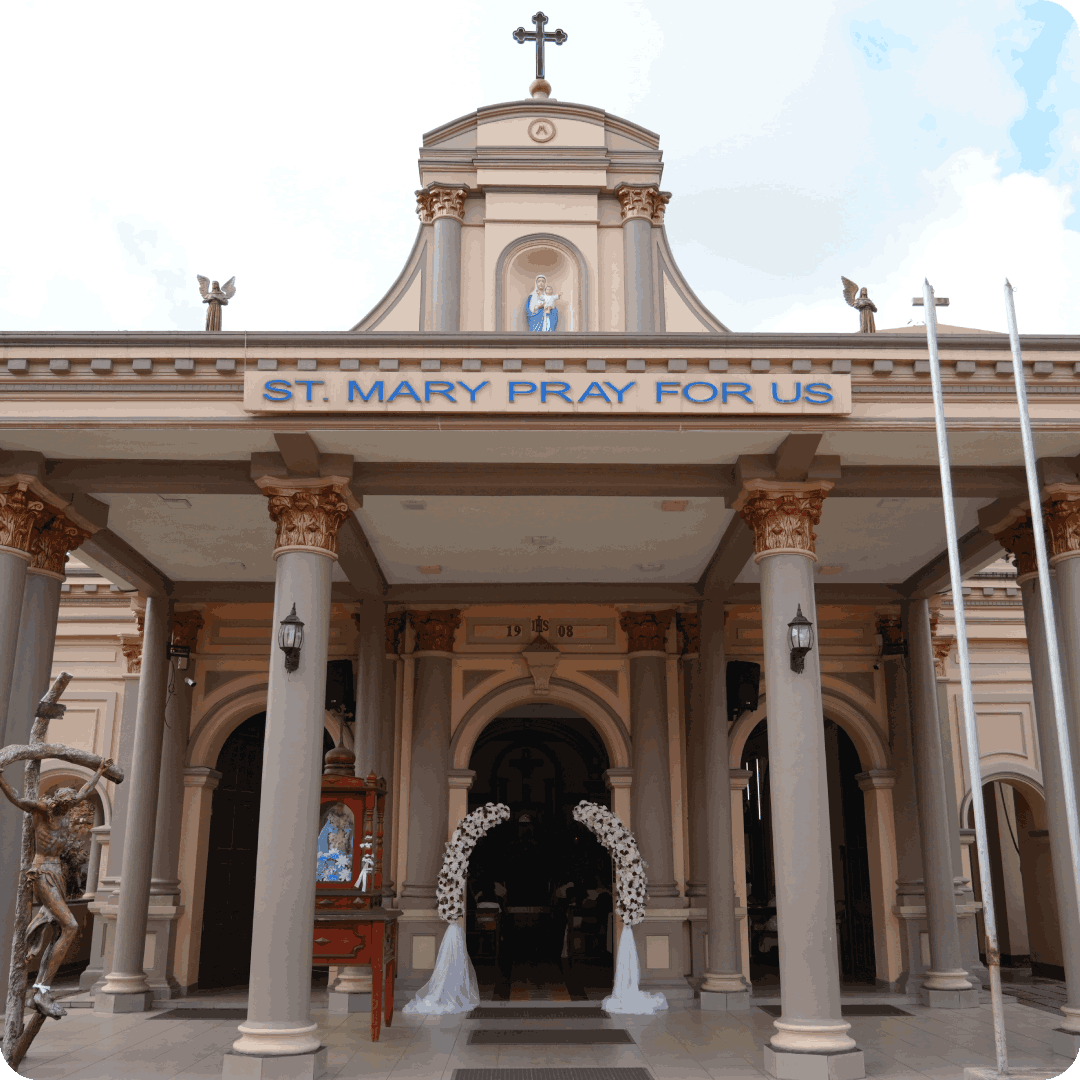
Welivita St. Mary’s Church, considered a tangible heritage, dates back to ancient times. Information suggests that with the arrival of the Portuguese in Sri Lanka, Catholicism spread throughout the island. Initially, there was a small number of Catholic devotees, and gradually, the Catholic Church expanded later on. The primary objective of this study is to identify the unique historical features of Welivita St. Mary’s Church. For this purpose, Welivita village in the Colombo District was chosen as the main study area, focusing on Arangapola, Gongodella, and Konhewatta. The church was constructed in phases, including the first building, the third building, and the third building. The aim was to collect data on the historical facts of the Welivita Church by centering on these three locations.
Formation of Welivita Village
As a result, small churches were established in the country. In this manner, the small Christian community of Welivita gradually grew to the present day. During this period, Portuguese power also spread across the Kelani River, which was a major road in Colombo and its surrounding areas. Information from the Salalihini Asna states that in the early period, before this era, there was a famous deputy king named Udaya Diwakara of the Kotte Kingdom. According to it, Minister Udaya Diwakara was entrusted with developing the “Kaikawala” outpost in Walpola (Amarasinghe 1976: page 25). Historical and literary sources mention that a famous bathing spot was built and paddy fields were cultivated in Hinati. Accordingly, this area can be named as a unique region rich in agriculture during that period
From the establishment of Arangapala Waadiya to the construction of the third church building
Information reveals that all religious services and necessary duties in the first church building constructed after the Arangapala Waadiya were performed by a person named Suriya Arachchi. Before teaching religious rites, Father Goncalves performed rituals such as blowing conch shells, beating drums, and performing songs, according to Indian culture (In-depth interviews, St. Mary’s Church, 2024.03.13). This place where religious rites were performed is known as “Arangapala”. Due to the suffering and inconvenience caused by the Kelani River overflowing once a year or several times a year, a new church was decided to be built in the area called Gongodella, which was formerly a Muslim trading post near the Colombo-Avissawella road, abandoned due to Portuguese influence.
The new church was built in Gongodella by His Eminence Archbishop Sillani, who was in charge of the Colombo diocese at the time, and several villagers. There is a belief among the people that this plot of land was used as a cemetery where bodies were thrown into the river during floods (In-depth Interviews, St. Mary’s Church, 2024.03.13). Around 1860, or a similar period, the church was managed by a council named Sedawatta, affiliated with the Thotalaga parish (Amarasinghe 2001, page).
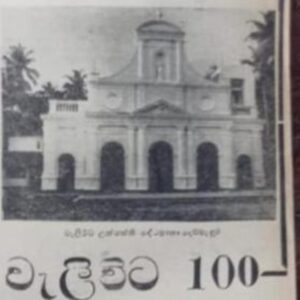
With the growth of the Welivita Catholic community over time, a new church building was constructed. In 1864 AD, the new church was built under the leadership of Father Peter Hilarion, who was in charge of the Thotalaga parish (Amarasinghe 1976, page 26). During the period of religious freedom under British administration, devout Catholics, under the leadership and guidance of reverend fathers, ceremoniously constructed religious buildings.
